Regional & Local Programs

The Center for Green Schools organizes programming across the country to provide free, convenient, locally relevant training, coaching, and resources to school system staff who want to achieve greener, healthier K - 12 schools.

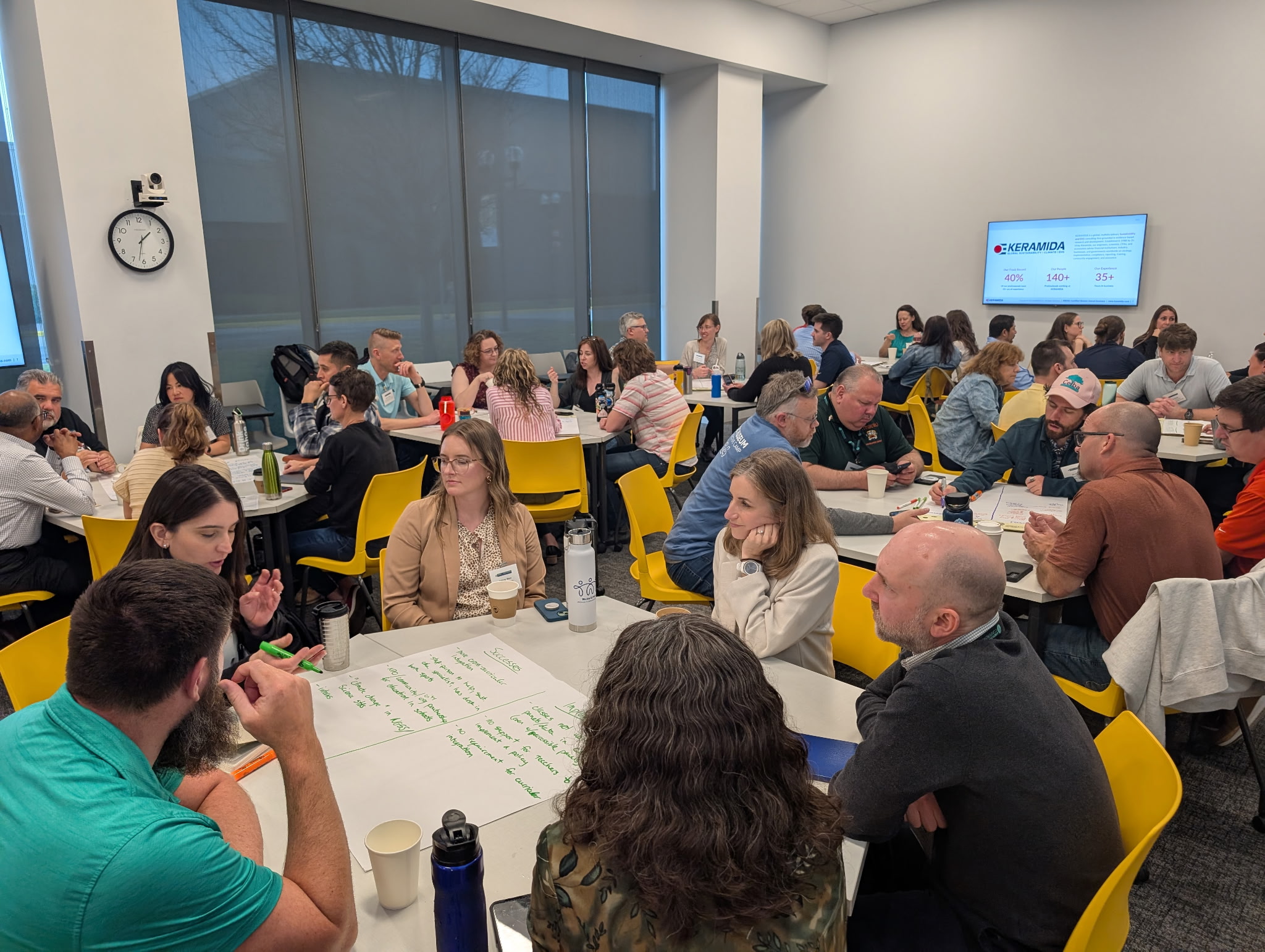
Our local trainings and networking events are for any professional in a school district, charter network, or private schools who wants to achieve greener, healthier K-12 schools. Those who participate often include school system staff from facilities, operations, environmental health, finance, and sustainability, but we're open to all, whether you have sustainability in your title or not! A particular emphasis of our local programs is to help individuals or teams advance comprehensive indoor air quality management plans in their district that also prioritize energy efficiency.

Programs and opportunities

  • Local in-person trainings
  • Virtual trainings and resources with locally relevant speakers and examples
  • Individualized coaching & funding opportunities
  • Local peer-to-peer connections

School Air Quality Fellowship Application  

The Center for Green Schools is now accepting applications for the 2026-2027 School Air Quality Fellowship! This program equips K-12 public school district staff with the training and support needed to develop plans for cleaner, healthier indoor air and energy efficiency. 

Audience and Eligibility 

  • The cohort will include up to 50 Fellows representing every region in the United States
  • For district-level staff in facilities, operations, environmental health, finance, sustainability, school nursing/ health services, and indoor air quality (IAQ)
  • To be eligible, applicants must be staff of U.S. based, K-12 public school districts. Only U.S. citizens or those lawfully admitted for permanent residence may apply
  • Preference will be given to applicants whose districts include Title 1 eligible schools and/or serve Tribal communities
  • Past Center for Green Schools Fellows are eligible to apply

Fellowship Benefits

  • Personalized Training and Technical Assistance: Delivered by industry experts on IAQ and energy management 

  • Peer Networking: Connect and share resources with national and regional peers 

  • Mini-Grant Funding: The opportunity to receive up-to $30,000 in mini-grant funds through a collaboration with the American Lung Association and the Center for Green Schools to help Fellows as they work to establish comprehensive IAQ management plans for their respective districts

*The estimated monetary value of the Fellowship is $5,000, with potential for up to $30,000 in mini-grant funding. 

Commitments   

  • Approximately 10 hours monthly, divided into training/networking (2 hrs.), credential coursework (5 hrs.), and district project work (3 hrs.). Time commitment varies depending on the credentialing opportunity pursued

  • Development of new or updated written guidelines, policies, and/or procedures at the district level to enhance indoor air quality (IAQ) 

  • Attendance at the Green Schools Conference and School Facilities Leadership Summit in Austin, Texas, February 8-11, 2027 (travel and attendance costs included with Fellowship) 

Application Process and Timeline  

  • Application open April 24 – July 10, 2026 

  • Fellows selected by July 31, 2026 

  • Fellowship Term: September 2026 – May 2027

Application Resources

FAQs

View frequently asked questions about the School Air Quality Fellowship. 

Are staff from individual schools eligible to apply?

No, staff of individual schools are not eligible, unless they also have substantial IAQ responsibilities across the district. Because many IAQ decisions and procedures are determined at the district level, the program believes that IAQ management planning is most effective when developed from the district level rather than by individual schools.

Can past Center for Green Schools Fellows apply for the 2026-2027 cohort?

Yes. Past Center for Green Schools Fellows (School Air Quality Fellows and Leaders in Sustainability Fellows) can apply for the 2026-27 School Air Quality Fellowship cohort, as long as they agree to participate in all aspects of the 2026-27 cohort. The 2026-27 Fellowship has several new components (e.g. free professional credentials, mini-grant funding) not available to previous cohorts, and therefore past Fellows are welcome to apply.

How do the mini-grants work?

The American Lung Association’s Clean Air School Challenge (CASC) program provides mini-grant funds to support a stepwise process for K-12 public schools to assess, develop, and implement indoor air quality (IAQ) management plans. Through a collaboration with the American Lung Association, the Center for Green Schools assists School Air Quality Fellows in applying for these grants during the initial stages of their Fellowship. By focusing on the "Assess" or "Plan" categories, Fellows receive vital resources as they work to establish comprehensive IAQ management plans for their respective districts during their Fellowship. Award amounts of up to $30,000 are available during the Fellowship, with opportunities for subsequent funding. More details can be found in the CASC mini-grant guidelines.

Applications are due by July 10, 2026, at 11:59 pm ET.

Apply

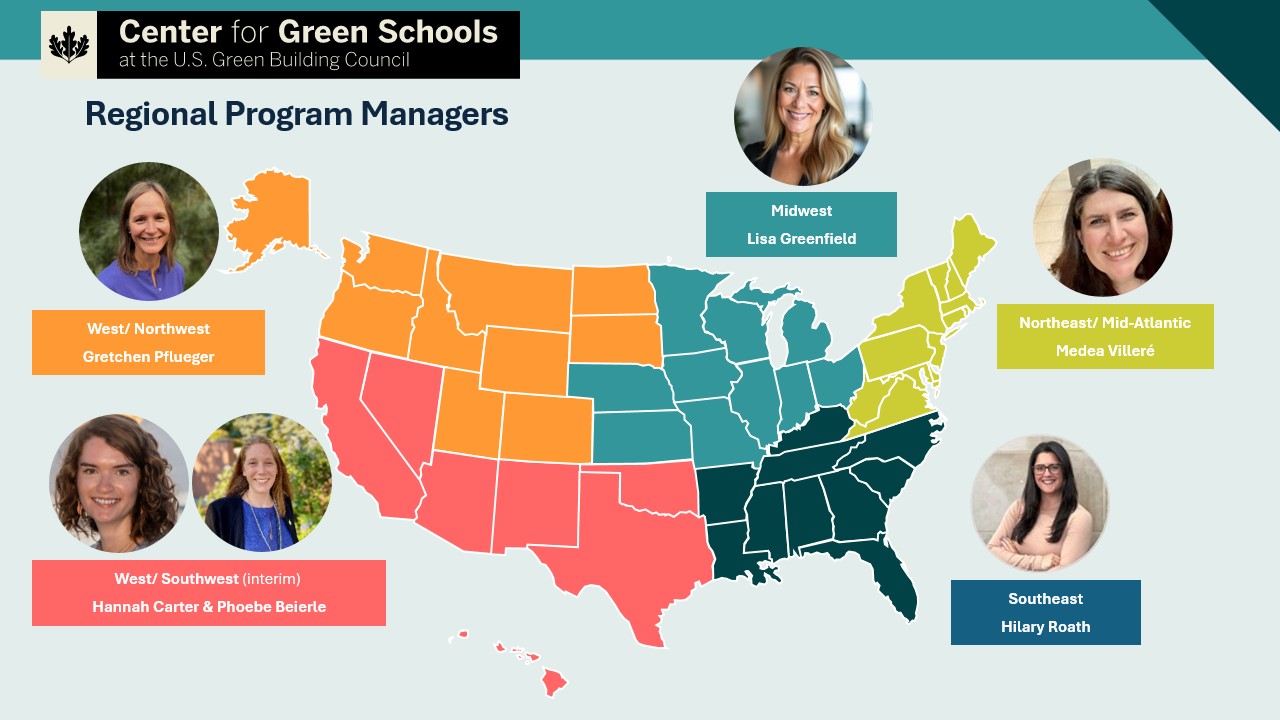
Connect with a Regional Lead

District staff interested in connecting with the Center for Green Schools about local training opportunities and support, please fill out a brief interest form. For further questions, please reach out to [email protected].
connect with a regional lead

Support

This project has been funded wholly or in part by the United States Environmental Protection Agency under assistance agreement 5V84097801 to the Center for Green Schools. The contents of this program do not necessarily reflect the views and policies of the Environmental Protection Agency, nor does the Environmental Protection Agency endorse trade names or recommend the use of commercial products mentioned in this document, as well as any images, video, text, or other content created by generative artificial intelligence tools, nor does any such content necessarily reflect the views and policies of the Environmental Protection Agency.