Build your team
Start by identifying who will lead and support IAQ planning across the district. A core team from facilities/maintenance, health services, and administration can drive the work, while early input from groups like contractors, union leaders, and teachers helps surface concerns and build buy-in.
IAQ Hub / Build Your IAQ Plan
A Roadmap to Healthier School Air
Building and sustaining a successful school indoor air quality (IAQ) program doesn't happen overnight. You don't have to do it alone, all at once or spend a lot of money.
Phelps Elementary School | LEED Gold | Rockland, MA | Photo: Raj Das
Make a plan of action for your district
Click through the steps to understand the journey.
Building a successful IAQ program starts by bringing the right people together, understanding your district’s needs, and creating a plan that works for your schools. You don’t need everything at once, and you don’t need to be an expert to get started.
KEY ACTIONS
- Designate an IAQ Coordinator to help lead the effort.
- Bring together staff from across departments to provide different perspectives and expertise.
- Define roles and responsibilities so everyone understands how they can contribute.
- Schedule regular check-ins to discuss priorities, concerns, and progress.
Assess and set goals
Establish a baseline of current conditions and policies to identify the most important IAQ needs. Use that baseline to set realistic goals that support district priorities.
KEY ACTIONS
- Assess gaps and needs by reviewing existing policies, work orders, and past IAQ complaints.
- Align IAQ program goals with district strategic plans, wellness initiatives, and energy goals.
- Prioritize district-specific needs and health concerns, such as asthma, wildfire, smoke, humidity, and ventilation.
Write your plan
A written plan provides a roadmap for keeping school environments healthy, safe, and efficient and serves as a key reference point for district practices over time.
KEY ACTIONS
- Map your goals against existing conditions to identify priority starting points.
- Start small by updating or writing one section or policy at a time.
- Identify opportunities to strengthen existing procedures rather than creating entirely new ones.
- Consider regulatory requirements, compliance obligations, and reporting structures.
Ready to Get Started?
Our toolkit includes everything you need to build a practical IAQ management plan for your school district. Download the toolkit today!
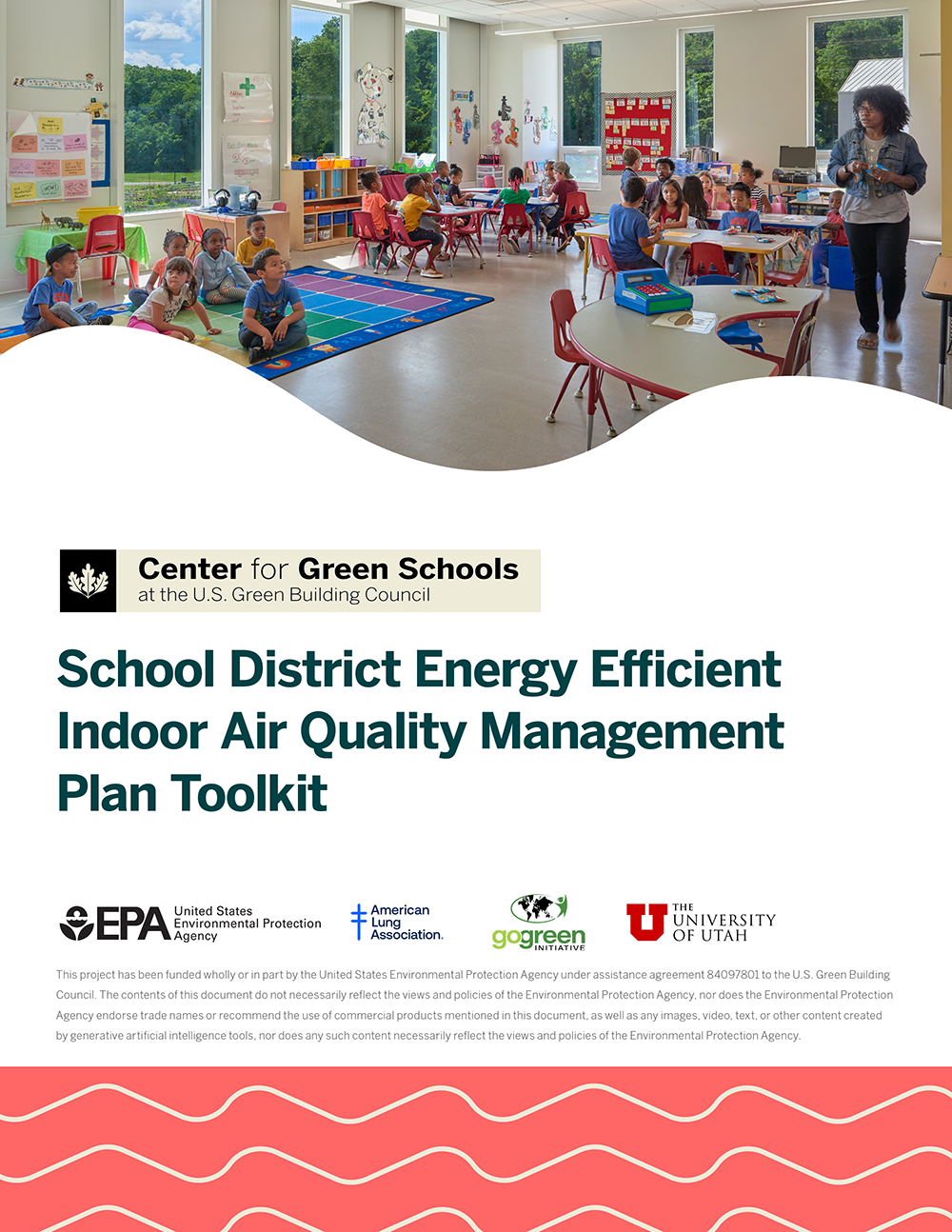
School District Energy Efficient Indoor Air Quality Management Plan
Developed for school employees, our toolkit includes everything you need to build a practical IAQ management plan for your school district. It walks you through each part of an Energy Efficient IAQ plan, with sample language, real district examples, EPA Tools for Schools resources, and guidance on how IAQ decisions can support energy efficiency.
Once you've identified priorities, it's time to put your plan into action. Many IAQ improvements involve low-cost, everyday operational practices. Use the practical tools below to train staff, investigate concerns, communicate clearly, and engage students in creating healthier learning environments.
Train staff
Engage students and families
Send communication
Investigate concerns
Reassess your plan annually and keep improving. Use what you learn from reported IAQ complaints, building inspections, and departmental feedback to strengthen procedures, training, and future facility decisions.
KEY ACTIONS
- Review IAQ complaints, inspection findings, and IAQ data to identify trends and repeat problems.
- Set a regular cadence for reviewing the plan and identifying where improvements are needed.
- Update policies, procedures, and training materials as needed.
- Use lessons learned to inform future maintenance, renovations, and investments.
We're here to help!
The Center for Green Schools IAQ Helpdesk team can support you at every step, from customizing your district's IAQ Management Plan to answering questions and connecting you with the right resources.
Have a draft ready? We will review it with you and provide feedback so you can move forward with confidence.
Phelps Elementary School | LEED Gold | Rockland, MA | Photo: Raj Das